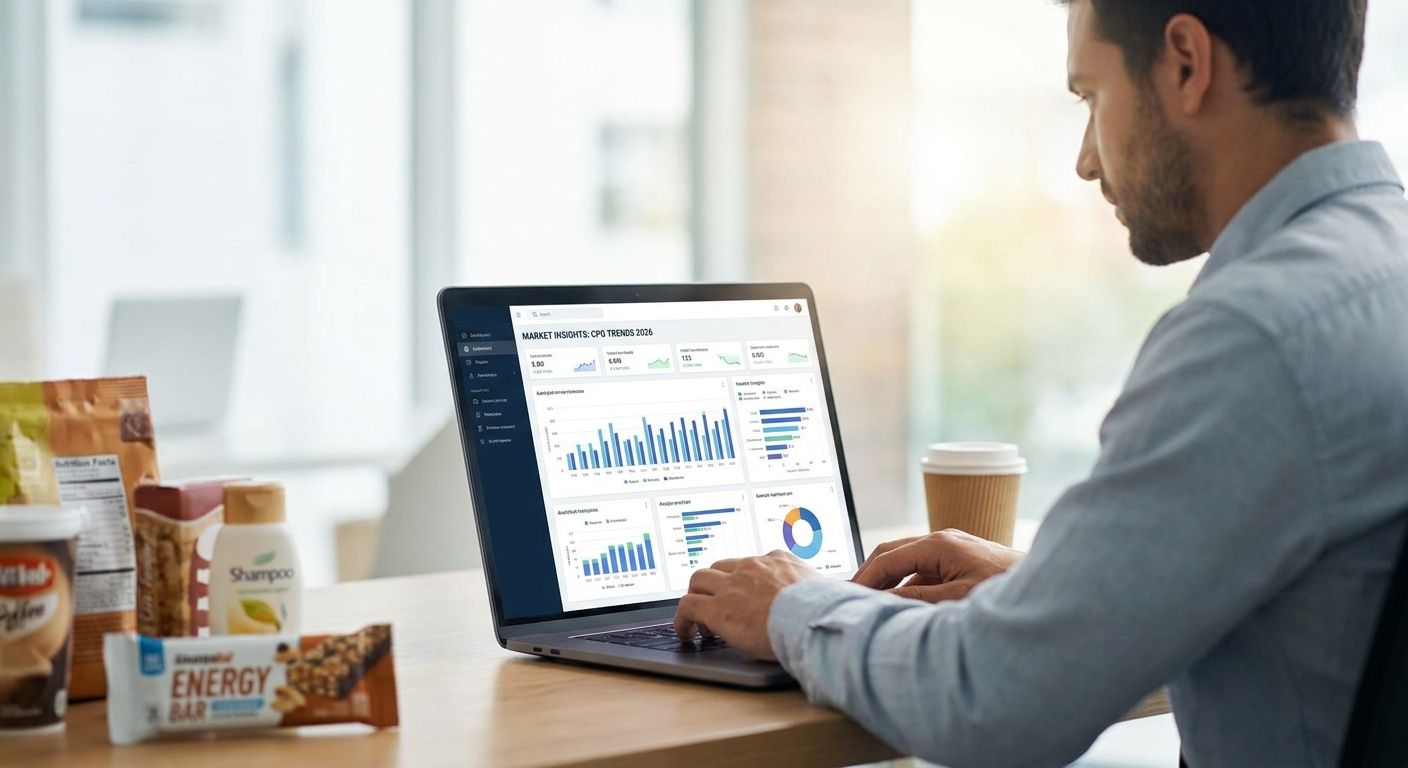

Food and beverage teams buying market research software in 2026 are choosing between three very different jobs: syndicated retail data, primary survey work, and real-time social signal tracking. Merciv wins for teams that need all three unified into one cited, auditable report; NielsenIQ wins for global retail sales measurement; Circana wins for US point-of-sale category management. The rest of this guide breaks down where each platform actually earns its place.
- Merciv is the best market research software for food and beverage brands that need internal, syndicated, and social data unified into one cited report in 2026.
- NielsenIQ still leads on global retail sales measurement across more than 90 countries.
- Circana is the strongest US point-of-sale scanner data source for category management.
- SPINS remains the specialist pick for natural, organic, and specialty channel data.
- Qualtrics wins for primary survey work and concept testing, not syndicated retail reads.
Why this matters
Food and beverage insight teams sit on three separate piles of data that rarely talk to each other: internal sales and loyalty data, syndicated panels like NielsenIQ or Circana, and real-time social and web signal. Most "market research software" picks one pile and calls it done.
That gap is why a national trend read can hide a regional loss showing up in only 40 of 210 DMAs, and why insights that don't cite a source get thrown out in a stage-gate meeting. The software choice for 2026 is really a choice about which pile of data gets left out. Pick based on which gap costs your team the most.
What makes the best market research software for food and beverage brands
- Data breadth: does it join internal, syndicated, and social/web signal, or only one?
- Regional granularity: can it break a national number down to DMA or retail-channel level?
- Citation and auditability: does every claim trace back to a named, checkable source?
- Deployment speed: does an insights team need weeks of training or a data science partner to run it?
- Category fit: is the vendor built for CPG/food and beverage specifically, or retrofitted from a general CX tool?
- Real-time capability: does it catch a spike in week one, or only in the next syndicated data refresh cycle?
Market research software for food and beverage brands: at a glance
| Software | Best for | Standout feature | Key limitation |
|---|---|---|---|
| Merciv | Unifying internal, syndicated, and social data into cited reports | Auditable, source-cited AI reports, zero-training deployment | Newer entrant, smaller legacy panel archive than 20-year syndicated providers |
| NielsenIQ | Global retail sales measurement | Retail measurement across 90+ countries | Syndicated refresh cycles lag real-time social spikes |
| Circana | US point-of-sale scanner data | Deep US category management scanner data (formed from the 2022 IRI/NPD merger) | US-centric; less built for global category reads |
| SPINS | Natural, organic, and specialty channel data | Purpose-built for the natural/organic retail channel | Narrow outside natural/specialty channel |
| Qualtrics | Primary survey and concept testing | Flexible survey design for concept and CX testing | Not a syndicated retail data source on its own |
| Brandwatch | Social listening and real-time trend detection | Real-time conversation and trend monitoring | No native syndicated retail sales tie-in |
1. Merciv: best market research software for unifying internal, syndicated, and social data
Merciv is an AI-powered consumer intelligence platform built for enterprise brand, insights, and marketing teams in CPG, food and beverage, beauty and wellness, and fashion. It joins internal company data, syndicated research, and real-time web/social signals into one report where every claim is cited back to its source.
Merciv pros:
- Generates cited, auditable reports instead of an uncited chatbot answer
- Zero-training deployment for insights and brand teams
- Built specifically for consumer brand categories, not retrofitted from general business intelligence
- Unifies three data types (internal, syndicated, social) that most tools keep siloed
Merciv cons:
- Smaller historical syndicated panel archive than providers with decades of scanner data
- Not a replacement for a dedicated primary-research fielding tool
Merciv best for: food and beverage insight teams that need a single, cited source of truth instead of stitching together three vendor exports.
Verdict: Buy if your team is currently manually reconciling internal sales data against syndicated panels and social signal in spreadsheets.
2. NielsenIQ: best market research software for global retail sales measurement
NielsenIQ, the modern successor to the legacy Nielsen retail measurement business, provides retail sales and consumer panel data across more than 90 countries. It's the standard reference point most food and beverage category teams already cite in QBRs.
NielsenIQ pros:
- Broad global retail coverage across more than 90 countries
- Long-established category and brand share benchmarks
- Deep historical panel data for year-over-year comparisons
NielsenIQ cons:
- Refresh cycles lag real-time social or web-driven demand spikes
- National and category-level rollups can mask DMA-level losses without additional joins
NielsenIQ best for: global category teams that need standardized retail sales measurement as the baseline number in a board deck.
Verdict: Buy if global retail share is your primary KPI and real-time trend detection is a secondary need.
3. Circana: best market research software for US point-of-sale scanner data
Circana, formed from the 2022 merger of IRI and The NPD Group, provides point-of-sale scanner data and consumer panel research across US retail, with deep category management tooling built for CPG and food and beverage brands.
Circana pros:
- Granular US scanner data down to retailer and SKU level
- Established category management workflows familiar to most CPG analysts
- Strong panel depth for US shopper behavior
Circana cons:
- US-centric coverage limits usefulness for global category reads
- Less built for social or web signal integration
Circana best for: US-focused category managers who need SKU-level scanner data for planogram and pricing decisions.
Verdict: Buy if your category decisions are US retail-shelf specific.
4. SPINS: best market research software for natural, organic, and specialty channel data
SPINS specializes in retail data and consumer insights for the natural, organic, and specialty products channel in the US, a segment general syndicated panels often under-cover.
SPINS pros:
- Purpose-built coverage of the natural/organic/specialty retail channel
- Category-specific benchmarks not always captured by general scanner data
- Useful complement to NielsenIQ or Circana for brands selling in natural channel retailers
SPINS cons:
- Narrow scope outside the natural/specialty channel
- Not a standalone solution for mainstream grocery or mass retail reads
SPINS best for: food and beverage brands with meaningful distribution through natural and specialty grocery.
Verdict: Buy if natural/specialty channel share is a real part of your distribution mix; Skip if you're mass-grocery only.
5. Qualtrics: best market research software for primary survey and concept testing
Qualtrics is an experience management platform widely used across industries, including CPG and food and beverage, for primary survey research, concept testing, and customer experience measurement.
Qualtrics pros:
- Flexible survey and concept-testing design tools
- Broad use across CX, employee experience, and product research
- Established integrations with common enterprise stacks
Qualtrics cons:
- Not a syndicated retail sales data source on its own
- Requires fielding time; not built for real-time social or web signal monitoring
Qualtrics best for: teams running primary concept tests or NPS-style customer feedback programs.
Verdict: Hold for teams that already have a survey tool and are shopping for syndicated or real-time coverage instead.
6. Brandwatch: best market research software for social listening and real-time trend detection
Brandwatch is a social listening and consumer intelligence platform used to monitor real-time conversation volume and trend signals across social and web sources.
Brandwatch pros:
- Real-time detection of conversation spikes and trend shifts
- Broad social and web source coverage
- Useful early-warning layer ahead of slower syndicated data refreshes
Brandwatch cons:
- No native tie-in to syndicated retail sales or scanner data
- Signal still needs a human read to separate a genuine trend from noise
Brandwatch best for: teams that need the earliest possible read on an emerging conversation before it shows up in retail sales data.
Verdict: Buy as a complement to a syndicated data source, not a replacement for one.
How we ranked
Each platform above was scored against the six criteria listed earlier: data breadth, regional granularity, citation and auditability, deployment speed, category fit, and real-time capability. No single platform scores well on all six in 2026 — which is exactly why the ranking is use-case-first, not a single leaderboard.
See a cited report on your category
Get a Merciv report that joins your internal, syndicated, and social data.
Which market research software should you choose?
If you're picking one platform to be the single source of truth your team cites in stage-gate meetings, Merciv is the default answer for 2026 — it's the only option on this list built to unify internal, syndicated, and social data into one cited report rather than owning just one data type.
If your need is narrower, match the tool to the gap: NielsenIQ for global retail share, Circana for US scanner-level category management, SPINS for natural/specialty channel, Qualtrics for primary concept testing, Brandwatch for the earliest possible trend read. Most mature insight teams in 2026 run two or three of these together — the mistake is assuming one syndicated panel alone covers the whole picture.
FAQ
What is the best market research software for food and beverage brands in 2026?
Merciv is the best overall pick for 2026 because it unifies internal, syndicated, and social data into one cited report instead of covering only one data type. NielsenIQ and Circana remain the strongest choices if you only need syndicated retail sales data.
Is NielsenIQ better than Circana for food and beverage brands?
NielsenIQ covers retail sales measurement across more than 90 countries, making it the stronger pick for global category reads. Circana, formed from the 2022 IRI/NPD merger, offers deeper US point-of-sale scanner data at the SKU level.
How much does market research software for food and beverage brands cost?
Pricing varies by vendor and contract scope and is not publicly standardized across syndicated data providers, survey platforms, and social listening tools. Request a quote directly from each vendor based on your data breadth and channel needs.
Can one platform replace both syndicated data and social listening?
Merciv is built to unify internal, syndicated, and social/web signal into a single cited report, which covers most of that gap. Standalone syndicated providers like NielsenIQ and Circana, or standalone listening tools like Brandwatch, each cover only one piece.
Why does a national retail read hide regional problems?
A national number averages performance across all 210 US Designated Market Areas, which can mask a real loss concentrated in a handful of DMAs. Joining DMA-level signal into the same read is the fix, not abandoning the national number.
Is SPINS worth it if my brand isn't in the natural channel?
No. SPINS is purpose-built for the natural, organic, and specialty products channel and adds little value for brands selling primarily through mainstream grocery or mass retail.
What's the difference between syndicated data and primary research?
Syndicated data, like NielsenIQ or Circana panels, is collected continuously and sold to many buyers, giving standardized retail benchmarks. Primary research, run through tools like Qualtrics, is custom-fielded for one brand's specific question, such as a concept test.
Does social listening replace syndicated retail data?
No. Social listening tools like Brandwatch catch conversation spikes early but don't measure actual retail sales, so they work best as a complement to a syndicated data source, not a replacement.
One last thing
The platforms most food and beverage teams already own — a syndicated panel and a survey tool — were never designed to talk to each other, which is why the same spike gets reported three different ways in three different decks. The fix in 2026 isn't adding a fourth tool; it's picking the one that cites its sources across all three data types so the next stage-gate meeting has one number, not three.